

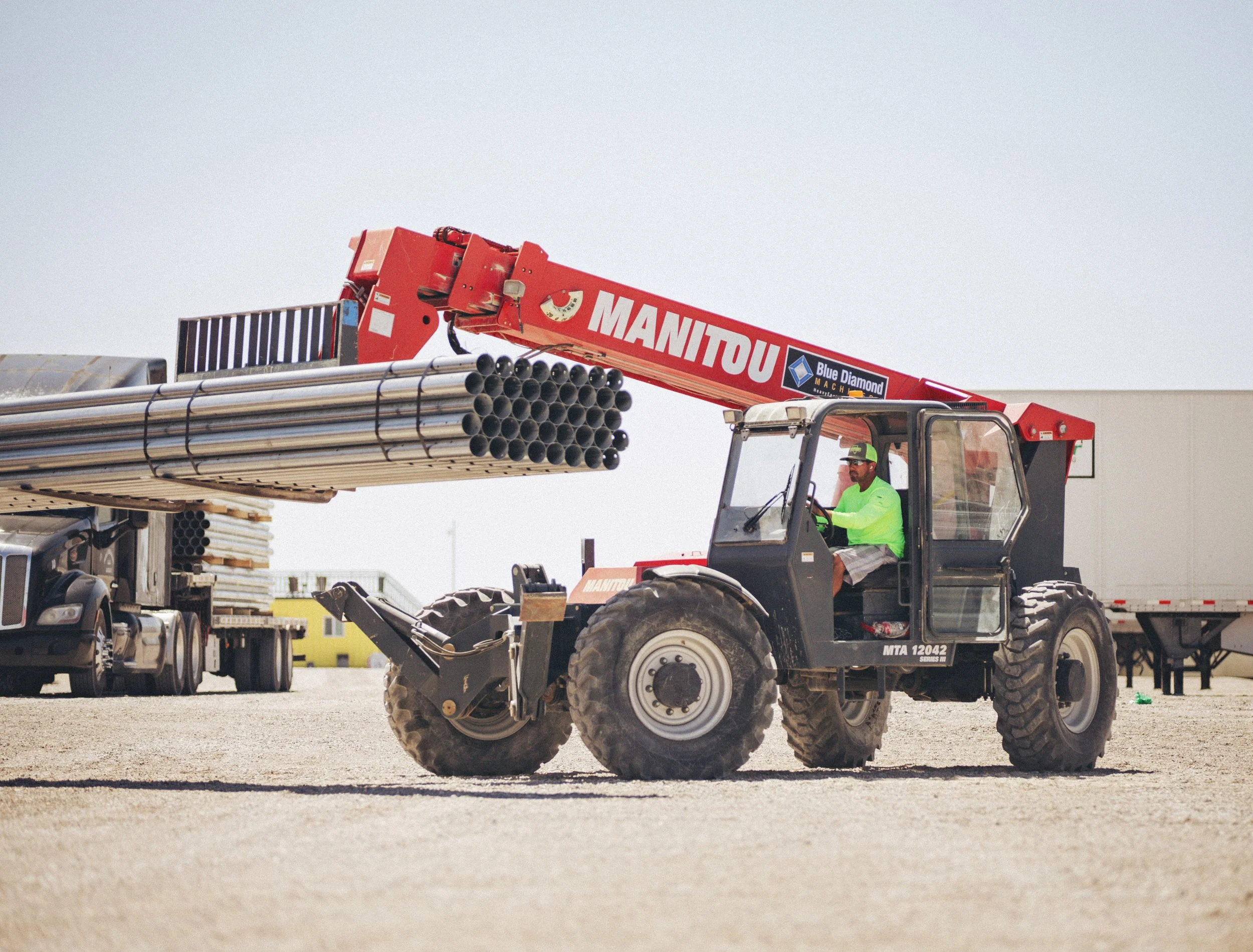
Solar projects move fast, and the materials often arrive even faster. From torque tubes and tracker frames to pallets of hardware and jobsite-ready components, solar field construction depends on reliable staging and organization long before anything is installed.
That’s where Industrial Outdoor Storage (IOS) comes in. IOS is industrial-zoned property designed for storing large, durable materials and equipment in an open, accessible layout, so crews can stage inventory, keep shipments organized, and pull materials when the schedule calls for it. At NIS (Nevada Industrial Storage), our space is used every day to help solar contractors stage inventory, organize inbound shipments, and pull materials according to active construction schedules.
What Solar Components Are Commonly Stored in Industrial Outdoor Storage?
Solar field development involves long, heavy, and high-volume components that are typically shipped in bundles, racks, or pallets. NIS regularly supports the storage and staging of materials such as:
Torque tubes (long steel tubes used in tracker systems)
Tracker frames and structural assemblies
Mounting and racking components
Palletized hardware (fasteners, clamps, brackets, fittings)
Crated or palletized project materials that need structured staging and quick retrieval
Trailers and containers used for project deliveries and sequencing
The key advantage is not just having space but it’s having space that’s organized enough to support real-world construction timelines.
Why Solar Construction Teams Use IOS for Staging and Overflow Storage
Solar sites can be busy, constrained, or constantly changing such as grading, trenching, foundations, and installing progress. Even when the jobsite is large, it’s not always ideal for long-term staging of every component at once.
Industrial outdoor storage helps solar teams:
Reduce jobsite congestion by keeping overflow materials off the active work zone
Stage materials by phase (foundation, racking, electrical, commissioning)
Support just-in-time delivery by building a buffer for scheduling shifts
Keep shipments consolidated so crews aren’t hunting across multiple drop locations
Protect project momentum when deliveries arrive early or installation windows move
For solar EPCs, contractors, and logistics partners, an IOS site can function as an extension of the project, just with more room to breathe.
Best Practices for Storing Torque Tubes, Frames, and Palletized Solar Materials
“A well-run storage plan is what turns extra space into a real operational advantage.”
Here are field-tested ways to keep solar materials organized and easier to deploy:
1) Create a Simple “Project Map” Before the First Delivery
Before deliveries start landing, define a basic layout:
inbound zone (check-in + inspection)
staging lanes (by project / phase / crew)
outbound lane (ready-to-go materials)
This keeps receiving clean and prevents “pile drift” where materials slowly spread and become harder to count.
2) Store Long Components with Consistent Support Points
Torque tubes and long frames are easier to manage when they’re staged consistently:
keep bundles aligned in the same orientation
maintain clear lanes for forklifts and trucks
avoid mixing different bundle lengths in the same stack row
3) Keep Pallets Off the Ground and Easy to Identify
For palletized hardware and packaged materials:
stage on pallets/dunnage so forklifts can move efficiently
keep labels facing outward where possible
separate by phase (example: “Row hardware,” “Mid-pier,” “End-pier,” “Electrical”)
4) Protect Packaging and Maintain Clean Access
Solar components often ship banded, wrapped, or crated for a reason. When staging:
keep original banding/straps intact whenever possible
cover sensitive packaging if weather exposure is expected
avoid blocking access to “first-needed” materials behind “later-needed” stacks
5) Use a Lightweight Inventory Process That Doesn’t Slow the Crew Down
A simple system tends to work best:
assign each stack row a “zone name” (A1, A2, B1, etc.)
log delivery counts per zone
take quick photos during receiving for condition verification
You don’t need a complex system, just a repeatable one!
Nevada Industrial Storage supports these workflows with on-site material handling equipment and receiving coordination, which is especially useful when multiple torque tube and frame deliveries arrive on tight timelines.
Next Step: Build a Staging Plan and Get Space Sized Correctly
If you’re coordinating solar component storage for torque tubes, frames, or palletized materials, the fastest way to get started is to align on:
estimated inbound volume (by phase)
delivery cadence (weekly / monthly)
the amount of space needed for clean lanes and staging zones
access needs for scheduled pickups
From there, you can size the right storage footprint and set up a layout that prevents rework later.
If you need availability or want to talk through your solar staging plan, reach out to Nevada Industrial Storage. Our team responds to inquiries within 24 hours.